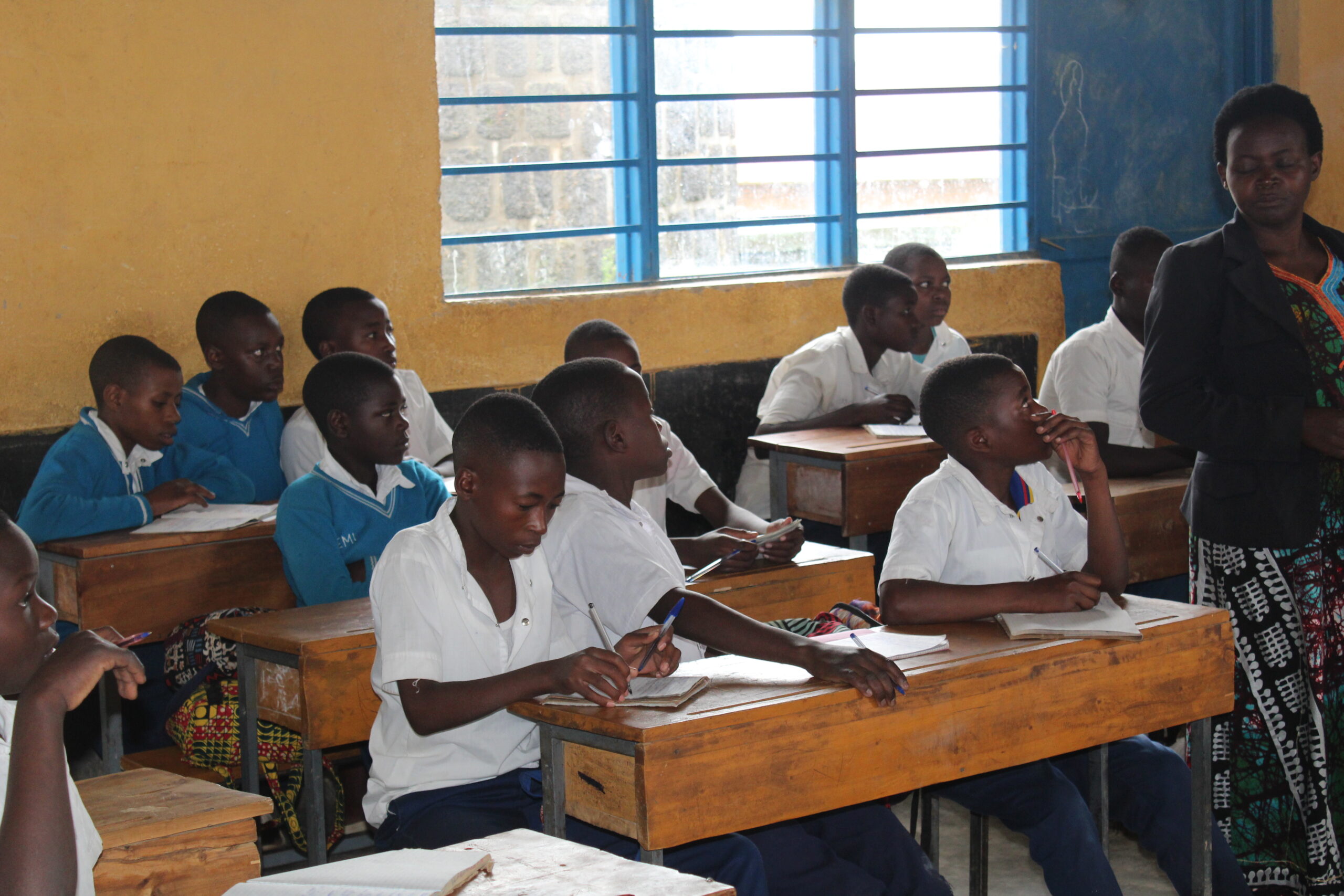
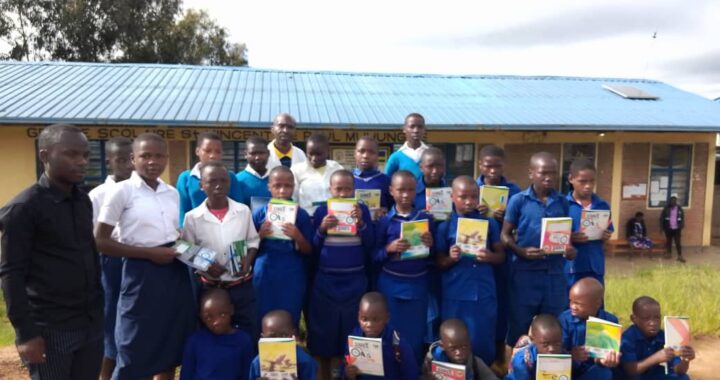
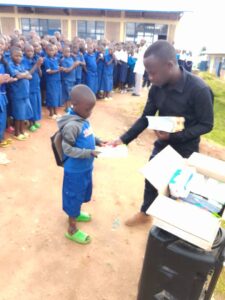
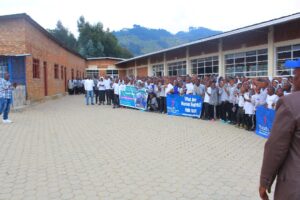
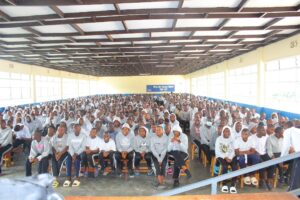
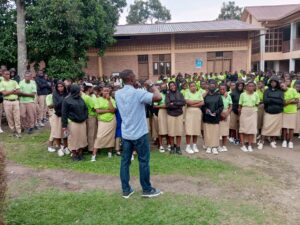
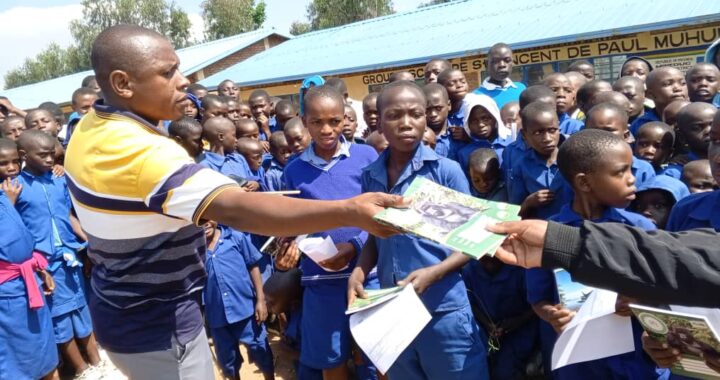
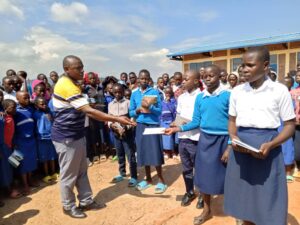
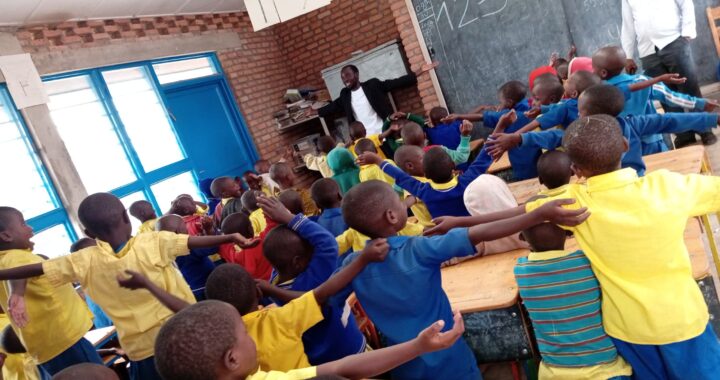
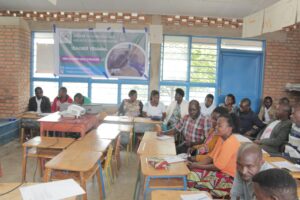
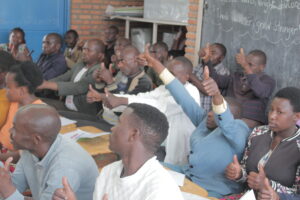
On August 07, 2025 Ache Rwanda hosted a Stakeholders Engagement Meeting at GS Muhungwe in Rurembo Sector. The meeting brought together the parents representatives, the community leaders, school leaders, teachers and the Sector Education Inspector for an
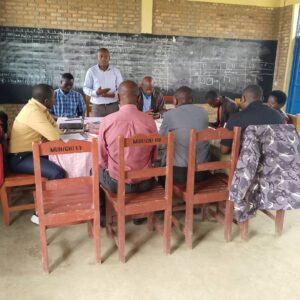
open dialogue an Ache Rwanda interventions, their progress and challenges.
It has also been a platform to share achievements, gather feedback and insights and identify pressing needs concerning school dropout.
Different causes of school dropout were discussed and it was found out that they not simply data and statistics, but the representation of the lives of real students at risk of being left behind and hence the development of a community that is jeopardized. During this time, stakeholders committed to work hand in hand and find lasting solution.
It is possible to create learning environments where no child is left behind when families, communities and schools come together with a share vision. In this regard, plans are underway to carry out a deeper needs assessment and develop targeted and shared interventions to keep every child in school, safe learning and able to complete their education in a holistic way.
Author Archive: Byiringiro Jean Claude
Accountability in Action
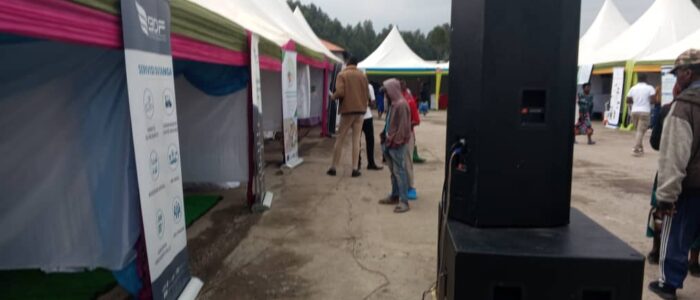
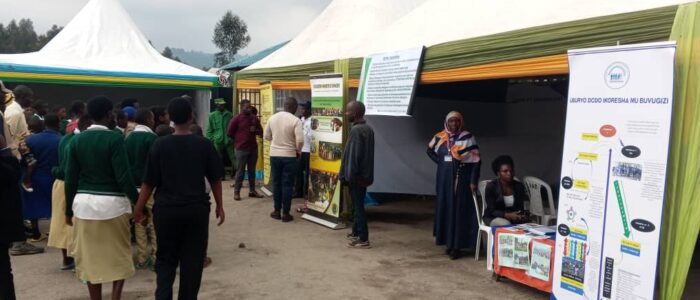
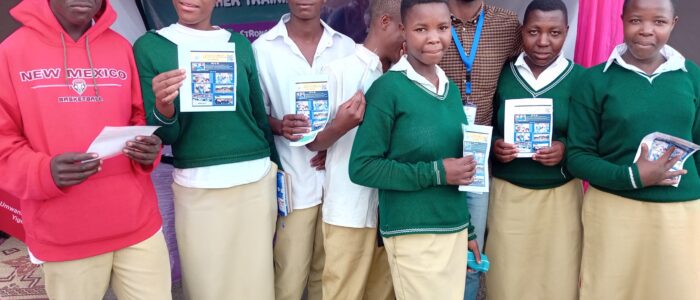
A saying goes: “Actions speak louder than words.” This is what happened when the JADF Inkingi Nyabihu organized an Open Day at Mukamira Main Car Park from June 18 – 19, 2025. This Open day brought students, educators, parents and local officials to ACHE Rwanda stand. Therefore, accountability was not narrated in reports but in interactive relationship. It was a time for lively conversations, sharing of impact stories and questions to better understand our interventions.
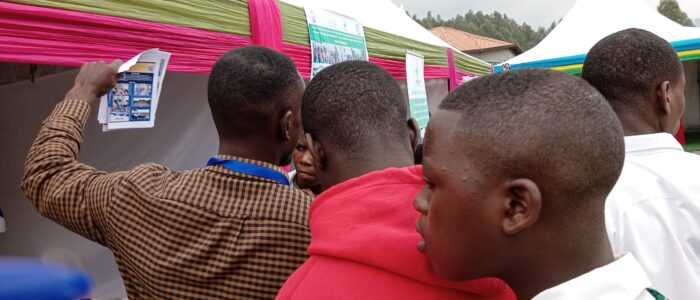
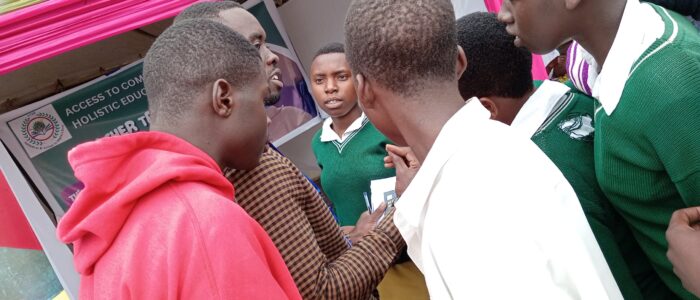
The event was not only an exhibition of our programs, activities, impact and dreams but an opportunity to listen to the stakeholders’ feedback, reflect on them and learn. What made it unforgettable was staying connected to the people we serve and journey together. Young voices advocated for children with disability, wise leaders advised how work smart towards bringing about positive change. Just not to work in the community, but to work with the community.
Choose Play – Every Day! How a Volley ball and net Brought Change in a School
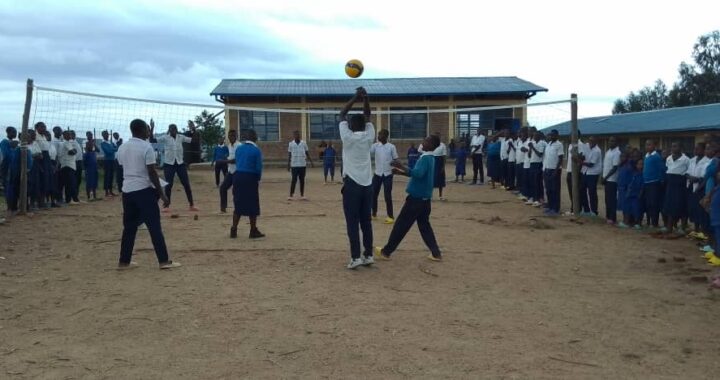
Access to Complete and Holistic Education (ACHE Rwanda) set out with a simple but powerful goal: to make school a more enjoyable place for students. Their approach was moderate – just a volleyball and a net. At the time, the students had ever played volleyball. It was new, unfamiliar, and exciting.
What started as a fun break from the routine quickly became something much more. The students were curious, then engaged, then passionate. They learned the rules, practiced after school, and began developing real skills. Laughter and energy returned to the school yard.
As interest grew, so did the talent. Friendly matches turned into inter-class competitions, and eventually, the school began participating in local tournaments. The transformation was incredible.
“We knew nothing about volleyball, but now we are the champions of our sector. It helped us learn and enjoy, but now we are competitive too.” Damas
This simple gift sparked a wave of joy, learning, and growth. It showed that meaningful impact doesn’t always come from grand gestures—sometimes, all it takes is a ball, a net, and the belief that students deserve to play, learn, and thrive.
On this International Day of Play, let’s remember that play is not simply leisure; it is a right, it is children’s life, it is how they grow, learn, connect and thrive. The small gift to students triggered joy, connection, learning and growth. Yes, it sometimes takes very little things with a strong belief that students deserve that chance to play, learn and grow every day.
Leaving no One Behind: A Teacher’s Commitment to Holistic Education
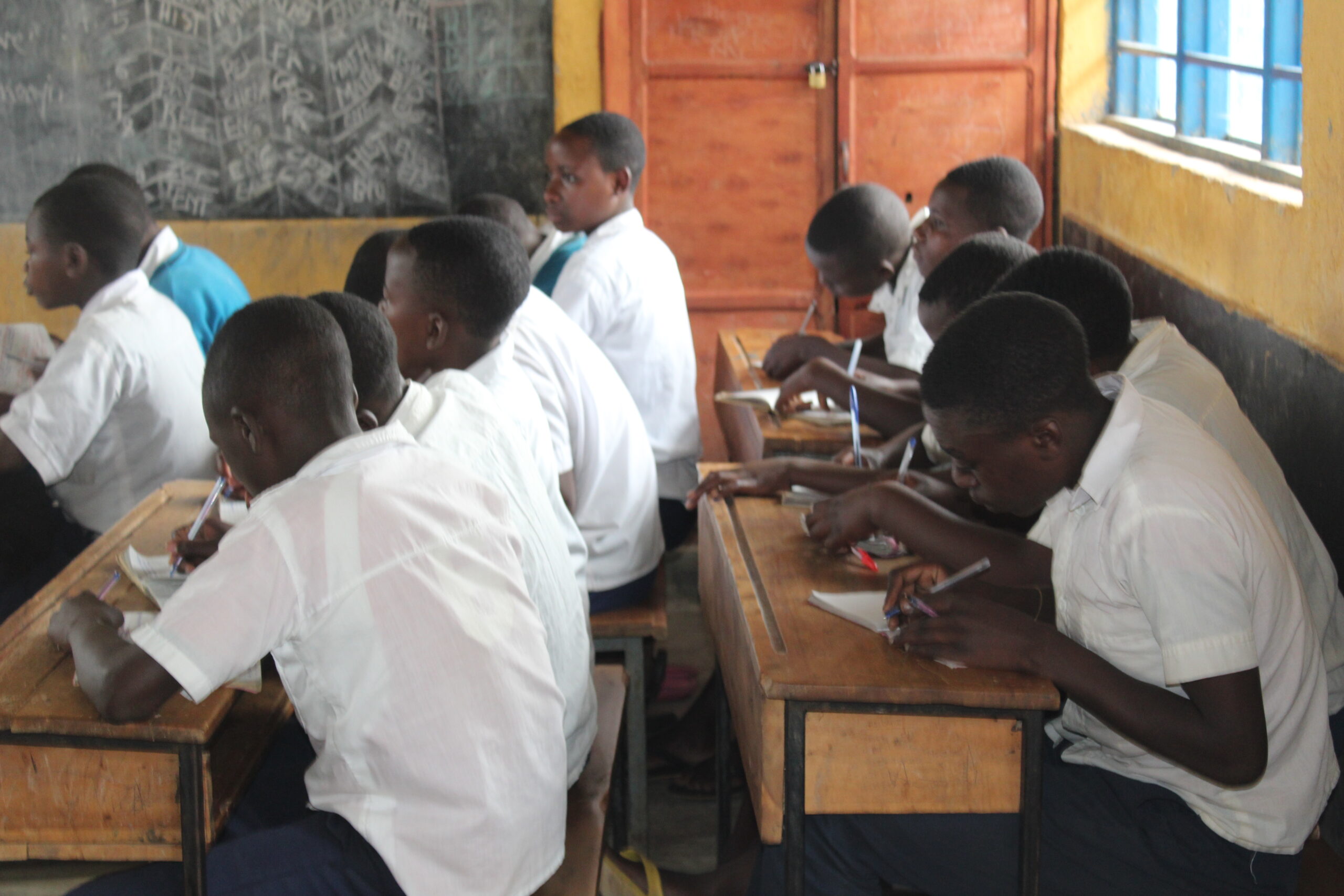
In the classroom where students are learning at different paces, and most of them at a slow one, a teacher committed to ensuring that every student progresses. To leave no one behind, the teacher provided students with individualized support and made her approach meet each student’s uniqueness. She made them feel confident and valued. In the light of students’ active engagement in their learning the teacher used individual tasks, collaborative activities to encourage peer learning and the sharing of insight. Not only did this improve students’ skills but it also promoted students’ emotional and social development preparing them for a holistic education.

Access to Complete and Holistic Education (ACHE Rwanda) works alongside teachers at GS Muhungwe to stimulate the academic, emotional, and social aspects of learning, that enable teachers to embody the principles of holistic education, and nurture students to become confident, compassionate, and capable individuals.
Celebrating Not Just Results, but the Courage to Keep Going
Rewarding best performing students has been a practice that is changing the school life. When we started to reward best performing students, we wanted to encourage every student to work hard and succeed since failure was one of the causes of school dropout. But when best performers were rewarded, some other aspects of the school life were impacted. This is not only celebrating results now, but celebrating students effort to get the results as well.
There has been a shift in different things: At first, many students struggled with attendance and motivation, often arriving late or distracted. In the morning study, students started to arrive early and got focused. They talked about goals, encouraged each other, and took pride in their growth. Parents, too, saw the change. They began adjusting routines, choosing to let their children head to school early instead of holding them back with chores. Why? Because they saw how much it meant to their children to be acknowledged not just for succeeding, but for trying. Emulation kicked in naturally: when one child started getting praise for showing determination, others followed, eager to earn that same recognition.
At the end of the second term, it wasn’t just a celebration of academic results it was a celebration of mindset. And that mindset brought about a culture of consistency, responsibility, and hope.
Human Rights: An Approach to Educate a Holistic Generation

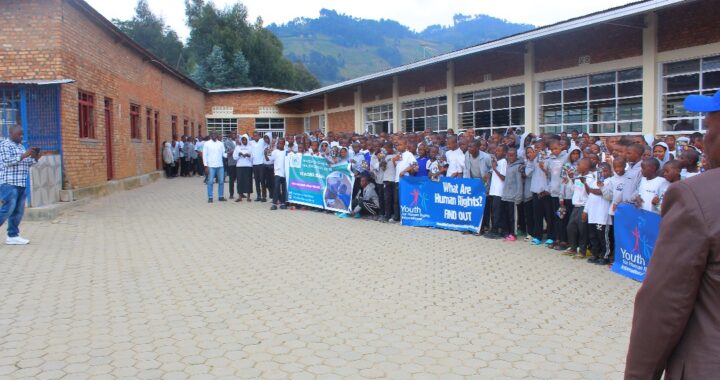
It is essential to engage the youth in human rights as a way to bring about a generation that understand the worth of others, the essence of justice, equality and the opportunities at their hand to open gates for the societal development around them through accessing complete and holistic education.
In partnership with Rwanda Youth Clubs for Peace Organization (RYCLUPO), Access to Complete and Holistic Education (ACHE RWANDA) has engaged (626) students in College Baptiste de Kabaya, (1206) Groupe Scolaire Rambura Garcon and (656) Saint Martin Gisenyi TVET schools in fundamental human right with a key highlight on the rights to education and play. The rights at the heart of a conducive learning environment where students can achieve holistic education.

Students’ Retention Campaign
One of the challenges that education faces is school drop out. When Access to Complete and Holistic Education came to exist, the number of students who left the school before completing school was high.
A lot has been done to make sure students are in schools. The problem is to know if those students who are sent back to school remain there and complete it.
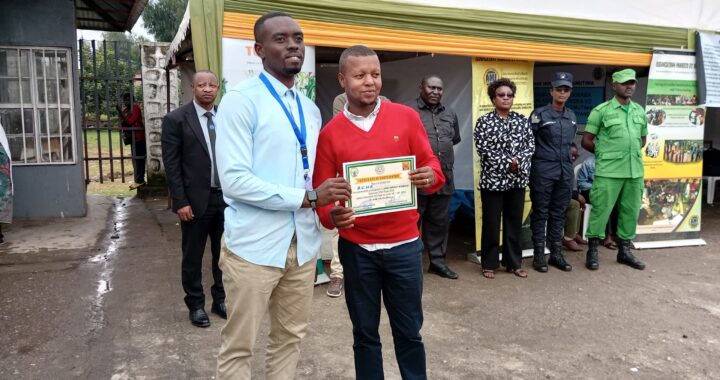
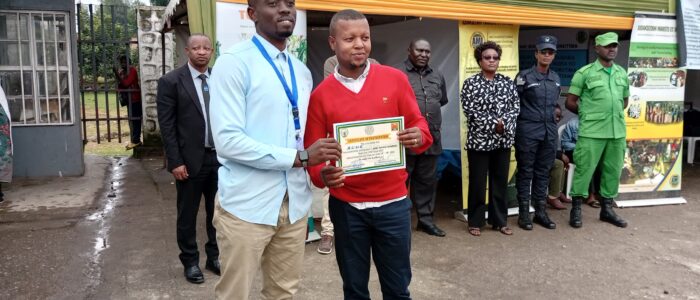
To encourage students to remain in schools and complete them, ACHE launched a Students’ Retention Campaign “NIYEMEJE KUJYA KU ISHURI, KURIGUMAMO NO KURIRANGIZA” by rewarding students who have been able to stay in school and perform well in their examinations.
It has been a time to set goals about showing up to school on a regular basis and strive to succeed in their daily lessons.
Unlocking the Power of Learners’ Active Engagement through Improved Teaching Methods

On December 15, 2024, Access to Complete and Holistic Education (ACHE) trained teachers and school leaders on active methods of engaging learners in their learning at GS Muhungwe. A school which is located in Nyabihu District, Rurembo Sector.
The team included 32 (12 Females) teachers and 3 school leaders. The training objectives were to help teachers be able to:
- Identify traditional and current methods of teaching and be able to evaluate their effectiveness in today’s teaching
- Reflect and evaluate the role of the teacher as the key to change in the current education practice and apply this to their own situation as a teacher
- Develop and apply strategies to encourage learners’ active engagement in their learning

Reflecting on Past Learning and Current Teaching
An essential part of the session was dedicated to retrospection. Teachers were encouraged to reflect on their past learning experiences and the teaching methods they currently use. This reflective process helped them identify areas for improvement and acknowledge their strengths. When teacher Alex was reflecting about the kind of education he received in his school time, he pointed out that this kind of teaching should no longer exist in our schools. He said: “It is high time current teaching and learning process changed to educate students in a holistic way. I still remember how I suffered not being engage in addition to being abused by my teacher. I had a very bad teacher but I also had a good one. As far as I am concerned, a good teacher means a good class; therefore, we need to engage every learner in their learning.”

Not only did the training emphasize on theories behind active engagement of students in their learning but it also focused on practical methods and reflective practices that enhance teaching effectiveness. This encouraged teachers to think of ways they can bring about change in their classes as they improve the level of students engagement in their lessons.